Over twenty years ago we edited and published a little red book in two bilingual versions, English-Arabic and English-Hebrew, that were used in schools and universities in Israel (from Jerusalem to Acre) and in Palestine (from Jenin and Nablus to Gaza).
Given the post-2023 disasters and their ongoing consequences, we are re-editing it, differently organized :
I- COMMUNITY OF MAN
1. Everybody can be great. Because anybody can serve. You don’t have to have a college degree to serve. You don’t have to make your subject and your verb agree to serve. You don’t have to know about Plato and Aristotle to serve. You don’t have to know Einstein’s theories of relativity to serve. You don’t have to know the second theory of thermodynamics in physics to serve.
2. We are prone to judge success by the index of our salaries or the size of our automobiles, rather than by the quality of our service and relationship to humanity.
3. As long as there is poverty in the world I can never be rich, even if I have a billion dollars. As long as diseases are rampant and millions of people in this world cannot expect to live more than twenty-eight or thirty years, I can never be totally healthy even if I just got a good checkup at Mayo Clinic. I can never be what I ought to be until you are what you ought to be. This is the way the world is made. No individual or nation can stand out boasting of being independent. We are interdependent.
4. All men are interdependent. Every nation is an heir of a vast treasury of ideas and labour to which both the living and the dead of all nations have contributed. Whether we realize it or not, each of us lives eternally “in the red”. We are everlasting debtors to known and unknown men and women. When we rise in the morning, we go into the bathroom where we reach for a sponge which is provided for us by a Pacific islander. We reach for soap that is created for us by Europeans. Then at the table we drink coffee which is provided for us by a South American, or tea by a Chinese, or cocoa by a West African. Before we leave for our jobs we are already beholden* to more than half of the world.
5. I have the audacity to believe that peoples everywhere can have three meals a day for their bodies, education and culture for the mind, and dignity, equality, and freedom for their spirits. I believe that what self-centered men have torn down, other-centered men can build up.
6. What is needed today […] is a committed altruism which recognizes this truth. True altruism is more than the capacity to pity; it is the capacity to empathize. Pity is feeling sorry for someone; empathy is feeling sorry with someone. Empathy is fellow feeling for the person in need – his pain, agony, and burdens.
7. An individual has not started living until he can rise above the narrow confines of his individualistic concerns to the broader concerns of all humanity.
8. Every man must decide whether he will walk in the light of creative altruism or the darkness of destructive selfishness. This is the judgement. Life’s most persistent and urgent question is, What are you doing for others?
9. The ultimate measure of man is not where he stands in moments of comfort and convenience, but where he stands at times of challenge and controversy. The true neighbour will risk his position, his prestige, and even his life for the welfare of others. In dangerous valleys and hazardous pathways, he will lift some bruised and beaten brother to a higher and more noble life.
10. Courage faces fear and thereby masters it. Cowardice represses fear and is thereby mastered by it. Courageous men never lose the zest for living even though their life situation is zestless; cowardly men, overwhelmed by the uncertainties of life, lose the will to live. We must constantly build dikes of courage to hold back the flood of fear.
11. Many people fear nothing more terribly than to take a position which stands out sharply and clearly from the prevailing opinion. The tendency of most is to adopt a view that is so ambiguous that it will include everything and so popular that it will include everybody. [Many] men who cherish [high] and noble ideals hide them […] for fear of being called different.
12. For years now we have heard the word “Wait!”. It rings in the ear of every Negro piercing familiarity. Perhaps it is easy for those who have never fel the stinging darts of segregation to say, “Wait”. But when you have seen vicious mobs lynch your mothers and fathers at will and drown your sisters and brothers at whim; when you have seen hate-filled policemen curse, kick, and even kill your black brothers and sisters; when you see the vast majority of our twenty million Negro brothers smothering in an airtight cage of poverty in the midst of an affluent society… when you are forever fighting a degenerating sense of “nobodiness” – then you will understand why we find it difficult to wait.
13. There comes a time when people get tired of being trampled by oppression. There comes a time when people get tired of being plunged into the abyss of exploitation and nagging injustice. The story of Montgomery is the story of fifty thousand such Negroes who were willing to substitute tired feet for tired souls, and walk the streets of Montgomery until the walls of segregation were finally battered by the forces of justice.
14. The deep rumbling of discontent that we hear today is the thunder of disinherited masses, raising from dungeons of oppression to the bright hills of freedom, in one majestic chorus the raising masses singing, in the words of our freedom song, “Ain’t gonna let nobody turn us around”. All over the world, like a fever, the freedom movement is spreading in the widest liberation in history. The great masses of people are determined to end the exploitation of their races and land. They are awake and moving toward their goal like a tidal wave. You can hear them rumbling in every village, street, on the docks, in the houses, among the students […] and at political meetings. These developments should not surprise any student of history. Oppressed people cannot remain oppressed forever. The yearning for freedom eventually manifests itself.
15. There comes a time when a moral man can’t obey a law which his conscience tells him is unjust. And the important thing is that when he does that, he willingly accepts the penalty because if he refuses to accept the penalty, then he becomes reckless, and he becomes an anarchist. There were those individuals in every age and generation who were willing to say, “I will be obedient to a higher law”. It is important to see that there are times when a manmade law is out of harmony with the moral law of the universe.
16. Human progress is never automatic nor inevitable. Even a superficial look at history reveals that no social advance rolls in on the wheels of inevitability. Every step toward the goal of justice requires sacrifice, suffering, and struggle; the tireless exertions and passionate concern of dedicated individuals. Without persistent effort, time itself becomes an ally of the insurgent and primitive forces of irrational emotionalism and social destruction. This is no time for apathy or complacency. This is a time for vigorous and positive action.
17. The hope of the world is still in dedicated minorities. The trailblazers in human, academic, scientific, and religious freedom have always been in the minority. That creative minority of whites absolutely committed to civil rights can make it clear to the larger society that vacillation and procrastination on the question of racial justice can no longer be tolerated. It will take such a small committed minority to work unrelentingly to win the uncommitted majority.
18. When evil men plot, good men must plan. When evil men burn and bomb, good men must build and bind. When evil men shout ugly words of hatred, good men must commit themselves to the glories of love. When evil men would seek to perpetrate an unjust status quo, good men must seek to bring into being a real order of justice.
Le temps nous presse. Dans cinq jours l’avion décolle vers cet Orient que l’on dit Proche. D’abord, les kibboutz de la zone frontalière de Gaza, qui ont été dévastés il y a trois ans.
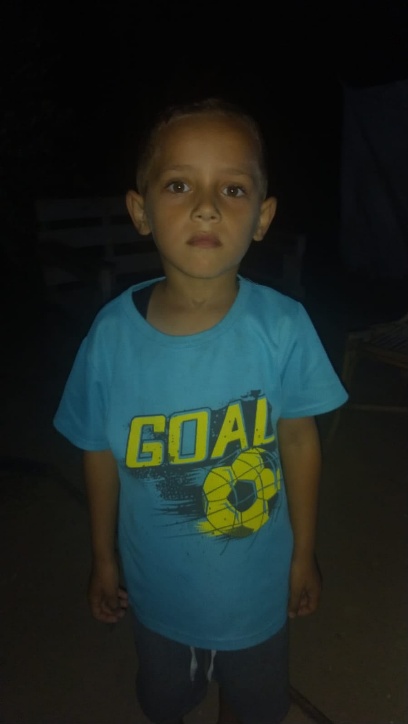
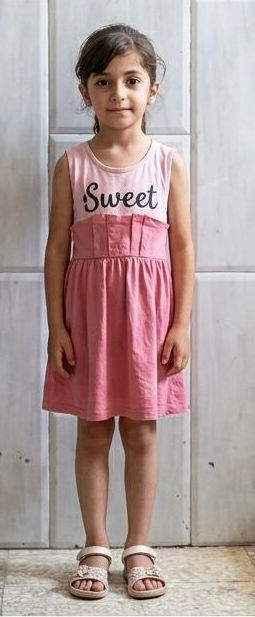
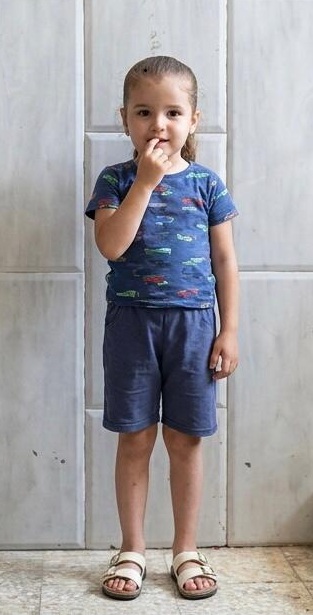
Depuis notre dernière Lettre nous avons reçu trois appels à l’aide. Au secours d’une mère qui vit sous la tente avec son fils, Joud, né le jour de Noël en 2020. Le père de Joud travaillait dans une usine de recyclage de sacs en plastique avant la guerre. Le 20 juin 2025, au plus fort de la famine qui frappait la Bande de Gaza, il est parti vers la zone où parvenaient les camions d’aide internationale, dans l’espoir de rapporter de la farine pour les siens. Des tanks étaient positionnés autour. Ils ont tiré, sans discrimination. Il n’est jamais rentré.
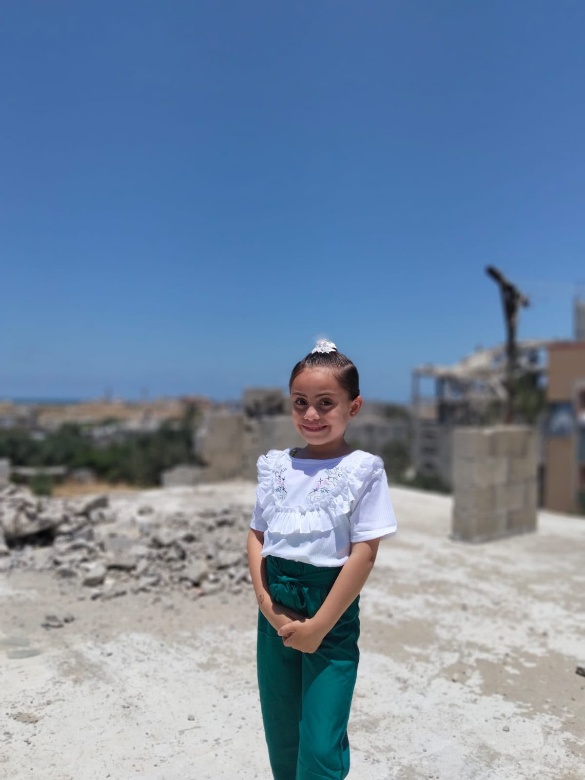
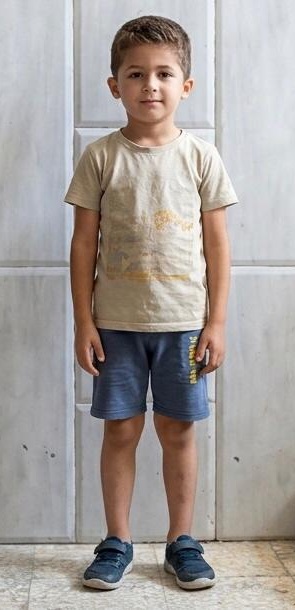
Au secours de Noha, sept ans. Elle aussi vit sous une tente, avec son frère Abdel-Momen, né en juillet 2020. Leur père travaillait dans le bâtiment. Le 9 août 2025, il est parti inspecter l’état de leur maison, qu’ils avaient dû abandonner. Tandis qu’il y était, un obus d’artillerie lui a pris la vie. De leur maison, que reste-t-il ?
Les deux femmes sont sans emploi, sans ressources. Trois prénoms qui résonnent en nous. Joud. Noha. Simples. Abdel-Momen, avec son t-shirt Carpe Dime. Carpe Diem, Vivre l’Instant, dans les ruines ?
Trois d’entre vous se sont déjà portés au secours des trois premiers enfants qui nous ont été présentés, de cinq à neuf ans. Notre suggestion, c’est un soutien d’un euro par jour, trois fois par an, par virement international direct – pour éviter les frais bancaires. Ces frais sont de l’ordre d’une trentaine d’euros par virement, quel que soit le montant, de trente à cent cinquante euros.
Dans un monde aussi compliqué, fermé, instable, déshumanisé de plus en plus, c’est ce qui est le plus simple pour nous. Concret. Pour en finir avec l’horrible refrain de l’impuissance confortable, qui obture les cœurs et la conscience.
Ce n’est pas grand-chose. Mais pour ces enfants et leurs mères, ce sera le premier signe d’espérance en trois ans d’effroi, de massacres.
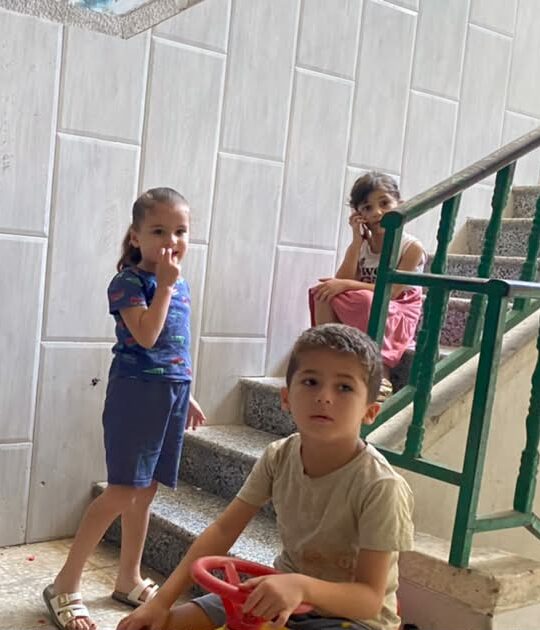
Déjà, leur rendre un visage, un nom. Les sortir des chiffres et des statistiques.
Noha. Joud. Abdel-Momen. Habitués à d’autres prénoms ici, des Kevin, des Loana, il nous faudra un petit effort pour retenir ces nouvelles syllabes, les répéter doucement. No-ha. Joud. Abdel… Momen, comme Moment sans le T.
Nous recréons ainsi entre nous du lien, de la confiance, un peu de partage.
De quoi nourrir nos dialogues. Comme une paisible complicité.
Sans antagonismes. Libérer un courant d’énergie positive, aimante, oui.
La prochaine Lettre, en novembre, sera différente. Je vous rendrai compte d’un voyage difficile, à plus d’un titre. L’ « arbitre-en-chef », malmené dans les sondages qui précèdent les élections de mi-mandat aux Etats-Unis (pour le parlement, le sénat, le gouvernorat d’une trentaine d’états), va-t-il déclencher trois jours de bombardements sur l’Iran, dans l’idée de redorer son blason ? Le scrutin du 27 octobre en Israël va-t-il changer quoi que ce soit à la situation bloquée que nous connaissons ?
N’oubliez pas que nous agissons sur quatre niveaux :
quotidiennement, une information précise et ouverte, via les media d’une dizaine de pays (Israël, Liban, Jordanie, Egypte, Arabie Saoudite, Qatar, Iran, Chine, Etats-Unis, Nations Unies, Angleterre…)Media October 2025 – Peace Lines
par la tenue de notre siteLETTRES DE LIAISON – Peace Lines– où la fréquentation en France a doublé en septembre, passée de 10 à 20%, derrière Chine et Singapour (54%), mais devant les Etats-Unis (16%) pour la première fois.
Et, enfin, par le soutien à ces familles de réfugiés de Gaza, qui ont tant la terrible sensation d’être abandonnés du monde entier, encore plus depuis un an.
Notre parole est simple : vous n’êtes pas seuls. Nous sommes des êtres humains.
Et le peu que nous pouvons, nous le faisons, pour vous, pour rédimer l’humanité en nous tous.
Vous qui nous lisez, vous savez que ceci n’est pas une Lettre hebdomadaire ou bimensuelle. Tout au plus mensuelle ou bimestrielle en période critique. Si nous avons décidé de vous envoyer une seconde Lettre ce mois de septembre 2026, c’est qu’il y a urgence, sans précédent, et que nous pouvons agir, au-delà des positions et points-de-vue individuels.
Il n’y aura donc aucun essai d’analyse générale ici, et rien qui relève de l’interprétation des causes et des rapports de forces géopolitiques. C’est que le temps, chacun, nous est compté. Qui peut dire, d’entre nous, de combien de temps il dispose vraiment ?
Avoir des amis à Gaza, c’est ne pas avoir cessé de trembler intérieurement pour eux, chaque jour. Tout silence prolongé pouvant être signe de mort violente. Vivre ainsi plus de trois ans, plus de mille jours, mille nuits – mille quatre-vingt huit, si vous vous demandez…
Quand le monde devient gris, la terre ici, les ruines là-bas, autant se taire. Aller à l’essentiel. Et s’il est tard, trop tard (?) pour tant d’adultes calleux, cyniques, hostiles – à quoi bon polémiquer ? – tout faire pour aider les enfants.
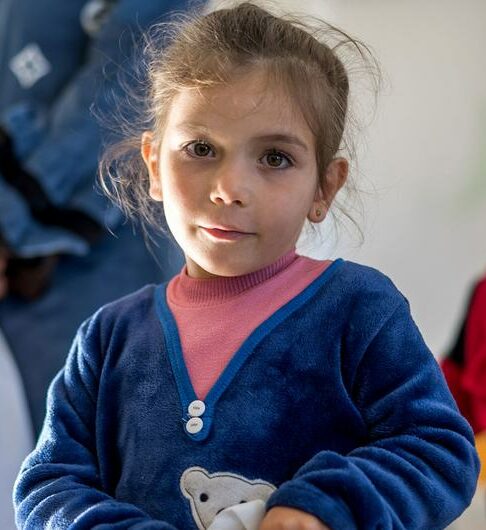
Ce ne sont, chacun, ni des chiffres, ni des statistiques. Pour leur redonner un peu d’espoir, de confiance, les reconnaître, les accepter, comme nôtres. Qu’ils ne se sentent pas abandonnés du monde entier. Leur rendre leur nom, leur visage.
Ils sont retournés à l’école pour la première fois depuis septembre 2023.
Trois ans sans école, sous les bombes, les missiles, sur les routes, d’un camp à un autre. L’école aujourd’hui ? Ce sont beaucoup de tentes avec cinquante enfants ou plus, assis par terre, et deux classes en même temps.
Voici Zara, sept ans. Son père travaillait dans un centre commercial. Il a été tué par un tir en juillet 2025, alors qu’il se rendait à un poste américain de distribution d’aide. Il voulait rapporter du pain.
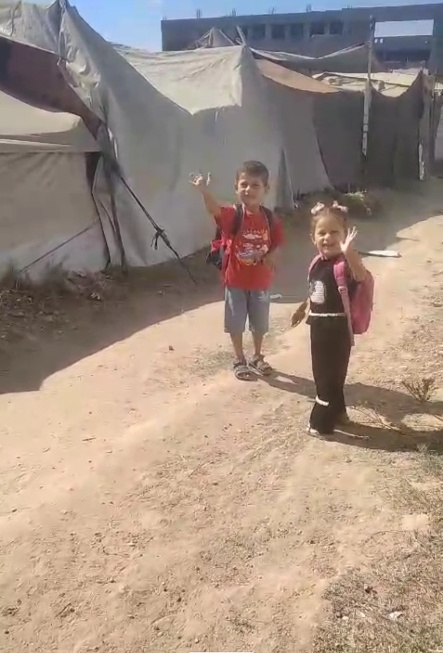
Mustafa et Tasneem (tout en haut de la page à droite), vous les voyez sur le chemin des classes – Tasneem au jardin d’enfants, Mustafa en CE1. Leur père a été tué en octobre 2023, dans un bombardement, alors qu’il marchait dans la rue. Ils vivent avec leur mère sous une tente.
Wateen, sous Yara, a quatre ans. Son frère, Moath, cinq ans. Leur père était chauffeur de taxi. Inutile de dire qu’il n’y a plus de taxis à Gaza ?
Enfin, le septième, en jaune (photo en bas de la page), c’est Hassan, six ans, dont le père était appariteur en faculté. C’est simple, lumineux. Leurs sourires, à Mustafa et Tasmeen sur le chemin de l’école, à Yara, Wateen et son frère Moath, nous sont adressés, photographiés par notre ami Nour. Le père de Nour, vous l’avez vu dans la Lettre de juillet. Il enseignait la littérature anglaise du dix-neuvième siècle, à l’université (rasée fin 2023).
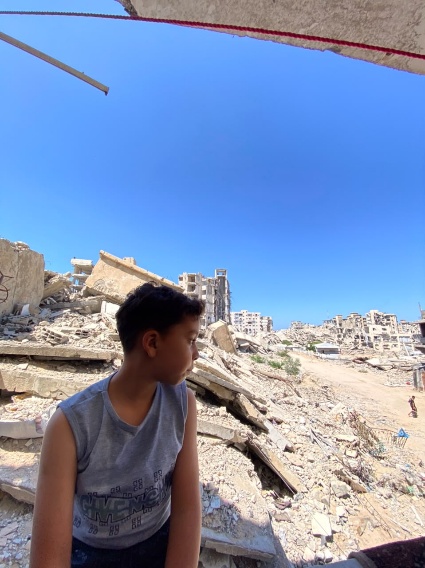
Le guetteur, Mahmoud, neuf ans, sur la première photo (tout en haut de la page), est le fils d’un pharmacien.
Pour que vous sachiez : il y avait des chauffeurs de taxi, des enseignants, des vendeurs, des appariteurs, des pharmaciens, des mères de famille dévouées à leurs enfants – et qui le restent. Tous ils sont sans ressources depuis trois ans, sans perspectives.
Parrainer un de ces sept enfants, cela pourrait se faire à raison d’un euro par jour, simplement. Comme un trait d’union.
Parti du cœur, sans plus. Dites-nous ce que vous en pensez.
Pour retrouver un autre niveau d’énergie, ensemble.
October 16 : As media threaten us all with the Mother Of All Bombs, and its many ripple effects, trust the wisdom of the powers that be – they’re still human, rational, aren’t they – and let it all flow by. Retreat into silence. Within.
Moath et sa sœur Wateen. Parents sans ressources. Yateen, orpheline de père depuis un an. Quatre étages au-dessus d’eux ont été écrasés par les obus, missiles.
L’eau potable est distribuée par camions-citernes.
Lettre de Liaison 152
11 septembre 2026
S.O.S. HUMANITE
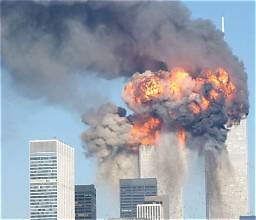
1) Le 11 septembre 2001, je me souviens exactement où j’étais quand un ami, de Sézanne, m’a appelé pour partager l’incroyable nouvelle. Les Tours Jumelles, je connaissais, d’être monté à leur sommet en ascenseur rapide, avec d’autres, dont un petit garçon.
Le 11 septembre, hier comme maintenant, on peut le voir d’au moins deux façons :
idéologique (pro ou anti-américain), ou humain.
Le 12 septembre 2001 je donnais des cours du soir gratuits (municipaux) à des adultes, un public majoritairement musulman, en banlieue de la capitale. Ils exultaient. Pour eux, c’était un “juste retour des choses”. Cela m’a révulsé. Je leur ai demandé comment ils pouvaient, un seul instant, oublier que c’étaient des êtres humains ordinaires, comme eux et moi, qui avaient ce jour-là suffoqué à mort, brûlé vif, sauté par les fenêtres ?
2) Idem d’Israël et de la Palestine, dans ce conflit que l’on dit facilement « religieux », « sans fin ». On peut voir ça de façon abstraite, idéologique, binaire (pro ou anti-israélien, pro-palestinien ou anti). Les deux positions sont réactionnaires, au sens propre. En réaction.
Partielles. Antagoniques. Elles vont à l’antagonisme. A l’exacerbation des oppositions, des tensions.
Ou bien considérer l’aspect humain, démographique, factuel.
Sur cette terre, là-bas, vivent aujourd’hui sept millions de juifs et sept millions de musulmans.
En 1850, sur 600.000 habitants de Palestine, une quarantaine de milles étaient juifs, une soixantaine de milles arabes chrétiens.
Il y a un siècle, au début des années 20, il y avait un peu moins de 600.000 musulmans, 84.000 juifs, 71.000 chrétiens, sur l’ensemble de cette Terre dite Sainte.
En 1945, les musulmans étaient un peu plus d’un million (58% du total), les juifs plus de 600.000 (un tiers), les chrétiens 145.000.
Aujourd’hui, on compte près de deux millions d’arabes palestiniens en Israël, et près de sept millions de juifs, un peu moins de 200.000 chrétiens.
Les deux millions d’arabes palestiniens d’Israël ont élu 13 députés palestiniens (sur 120) au parlement à Jérusalem en 2022. Le parlement palestinien de Ramallah, lui, ne fonctionne pas, depuis 2007. Il y eut, autrefois, un député juif symbolique en son sein, mais on a oublié à quand cela remonte.
Il va y avoir des élections parlementaires le 27 octobre. Que vont-elles changer ?
Les deux partis extrémistes sont représentés par treize députés à eux deux. L’opposition en compte soixante, la moitié exactement, d’où l’instabilité (due au système de pleine proportionnalité).
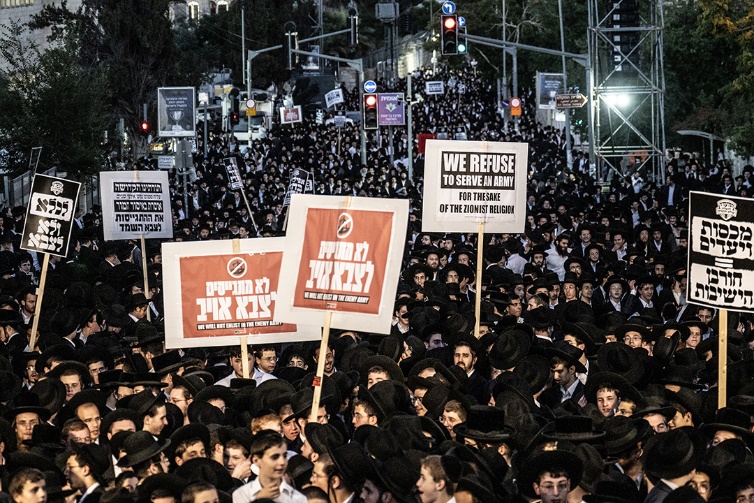
Sur les sept millions de citoyens juifs, un million et quart sont très religieux, et refusent tout service militaire, manifestent régulièrement, avec force, contre tout enrôlement dans l’armée.
On comprend dès lors qu’il ne s’agit pas d’un conflit « religieux » (entre juifs d’Occident et musulmans d’Orient), puisque les plus religieux des juifs israéliens ne veulent ni armée ni guerre.
3) Peut-on parler, comme beaucoup, de « conflit interminable » ? C’est oublier que le conflit franco-allemand a duré 75 ans, de 1870 à 1945, et provoqué deux guerres mondiales. Dans la première, deux millions d’allemands ont été tués, un million quatre cent mille français (900 par jour). Il y eut dix millions de morts ; dix millions de mutilés ; dix-neuf millions de blessés, d’amputés ; neuf millions d’orphelins. Entre 1939 et 1945, on compte autour de 80 millions de morts, dont plus de 25 millions en ex-Union Soviétique ; autour de 15 millions en Chine ; 8 millions en Allemagne, 6 millions en Pologne ; 3 millions au Japon…
Un Européen est mal placé pour se hausser du col, et faire la morale, en termes de longs conflits de voisinage – les Français et les Anglais se sont fait la guerre cent seize ans, de 1337 à 1453 (« la Guerre de Cent Ans »). Le conflit israélo-palestinien, lui, dure depuis 1948 : soixante-dix-huit ans. Il finira bien aussi. Y a-t-il du sang qui coule, aujourd’hui, entre Français, Allemands, Anglais ?
Autrement dit, la réalité est bien plus complexe qu’un simple duel du Bien contre le Mal – variables selon les camps.
4) Pourquoi nous ne sommes pas « pro-palestiniens ».
Le parti pris unilatéral, quel qu’il soit, creuse davantage le fossé entre les personnes, au sein des esprits. Quel que soit le conflit. Comme s’il y avait le Bien absolu d’un côté, le Mal de l’autre.
Brandir un drapeau, en l’espèce, c’est nier l’Autre, globalement. Un drapeau n’est qu’un drapeau, de toutes façons.
Les pandémies, les nuages radioactifs, les vagues de sécheresse caniculaire, les conséquences des guerres actuelles sur les carburants, les engrais, sont sans frontières.
Les souris et les rats qui prolifèrent à Gaza depuis la dévastation ne se confinent pas à Gaza.
Une explosion de rongeurs frappe les communautés frontalières de Gaza, jusqu’à 100 pris dans certaines maisons. Haaretz, 14 septembre 2026.
Il en va de même pour les nappes phréatiques contaminées par les eaux non traitées.
Sortir de la logique étroitement nationaliste, négatrice des Autres, qui interdit tout questionnement.
5) Ce qui nous occupe, maintenant, c’est la survie en paix, puis la coexistence quotidienne des deux peuples, des trois religions, et des autres (bouddhistes, athées…).
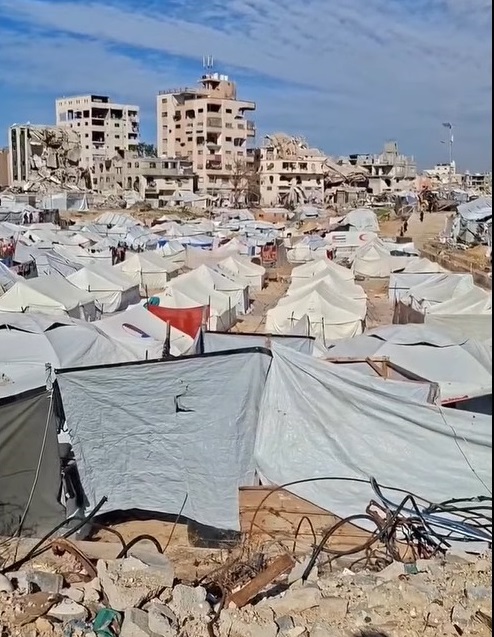
Ce qui nous occupe, c’est le sort des réfugiés de Gaza, plus de deux millions, sans accès à l’eau courante, à une électricité régulière, dans les 365 km carrés qui ont été dévastés.
Dans notre dernière Lettre (Lettre 151, du 6 juillet 2026), nous vous informions que les habitants de Gaza assez chanceux pour avoir retrouvé des murs ne trouvaient que des rouleaux de plastique et des tasseaux pour leurs réparations. Les autres, plus d’un million, vivent sous des tentes, dans des camps « temporaires », les pieds dans le sable ou la boue. Bientôt, la saison des pluies revient, d’ici deux mois. Ils seront alors inondés.
Ici, nous ne nous bouchons pas les yeux. Nous ne distribuons pas de points.
Vous qui lisez ces lignes, la plupart vous n’êtes pas informés par les mass media. Vous ne savez donc rien. « La guerre à Gaza est finie depuis un an », croyez-vous.
Non. On compte plus de mille trois cents personnes tuées depuis le cessez-le-feu d’octobre 2025. Un bus de Médecins Sans Frontières, ce 13 septembre, a été frappé en « dommage collatéral » à Gaza, avec dix volontaires humanitaires à bord. L’un d’eux a été blessé.
Et il n’y a pas que Gaza. En Cisjordanie, plus de mille cent personnes ont été tuées depuis octobre 2023.
Au Liban, ce sont plus de quatre mille personnes qui ont été tuées de mars à fin juin 2026.
Gaza – Cisjordanie – Liban – Iran – Yémen (cent mille personnes ont fui leur foyer dernièrement)… Tout se tient, tout est lié. Les trois premiers sont les plus touchés.
6) Ce que nous vous proposons : parrainer, chacun, un enfant de Gaza. Par un virement régulier. Si modique soit-il, ce sera une ligne de vie pour son destinataire. Vous pouvez le faire par notre intermédiaire, ou bien directement – nous avons évoqué le sort de Yara, orpheline, de Moath et Wateen, nous pourrons vous en nommer d’autres, dont nous partagerons avec vous le parcours.
Non des mots, des discours, mais des actes, simples, vitaux.
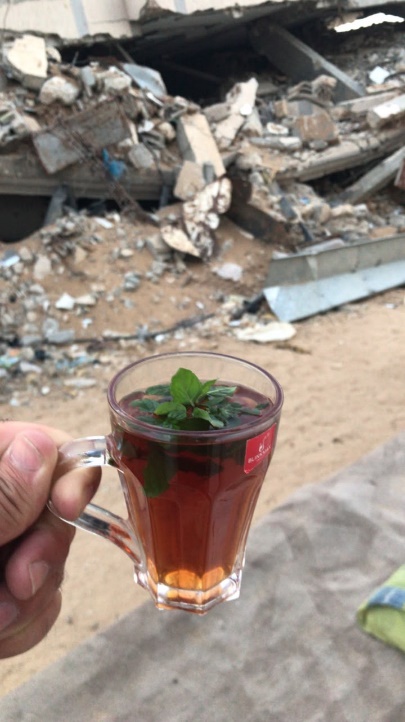
A titre d’information : le kilo de sucre coûte trois euros. Le thé, pour une boîte de cent sachets, huit euros. La menthe, un euro pour dix tiges – ceux qui connaissent le rituel du thé a la menthe en orient en comprennent l’importance. Davantage encore, dans les ruines.
Le prix d’un kilo de pain : trois euros, comme le sucre.
Trente œufs (rares à trouver) : dix euros.
Un kilo de légumes, de fruits (tomates, oignons, carottes, bananes, pommes, citrons) : six euros.
Un kilowatt d’électricité (intermittente) : vingt-cinq euros.
Vous savez que les salariés du secteur public n’ont reçu aucun salaire depuis trois ans. Il n’y a pas de revenus à Gaza, en dehors des transactions alimentaires, et quelques petits stands.
7) Voilà où nous en sommes.
Et si vous pensez que ce soutien ne prévient pas les causes du mal, de la misère, nous travaillons aussi en amont des problèmes. Si nous avons édité, avec celle-ci, cinq lettres de liaison en français cette année, à votre intention, nous en avons édité cinq autres en anglais, dont trois en juin, coup sur coup, destinées au réseau mondial des 160 Prix Nobel les plus connus, accessibles, dont plus d’un tiers participent à nos campagnes pour sortir du cycle des guerres. Début juin, nous étions au bord d’un embrasement catastrophique au Proche-Orient, et nous avons envoyé trois séries de S.O.S. détaillés à tous ceux, aux Etats-Unis, en Angleterre, en Allemagne, en France, qui sont en position d’influer sur le cours des choses, la conscience des risques.
Les « causes du mal », de toutes façons, ne sont pas à chercher à l’autre bout du monde.
Elles nous ramènent toujours à l’incompréhension tissée d’ignorance, à la surdité, la servitude volontaires, au déni égocentrique de l’Autre – que ce soit notre prochain ou notre lointain – à la rapacité, à l’appât du gain par tous les moyens.
A la base de tout conflit, ce sont les mêmes raisons : un oubli d’autrui, une négligence, un préjudice, un abus, non traités, non résolus, envenimés par des attitudes de jugement, d’exclusion, qui déshumanisent l’Autre, le rapetissent, et le rejettent en dehors de la communauté humaine. Avec violences psychologiques, verbales ou muettes, quand ce n’est pas physiques. Les familles fracturées, les couples désunis, nous en apportent le témoignage incessant. Que ce soit dans n’importe quelle région de France, d’Amérique, ou d’Orient.
Il ne s’agit pas de problèmes politiques globaux, d’antagonismes partisans, mais de problèmes humains, particuliers, d’urgences ignorées.
Quel type d’humanité sommes-nous en train de créer, par nos silences, nos paroles, nos actes ?
Cela alors que les Himalayas fondent, que le Toit du Monde se met à fuir, et que tant de catastrophes nous tombent dessus (600.000 hectares de forêts brûlés en Europe l’été 2026, plus de 200.000 morts dûs aux canicules sur les quatre dernières années).
De Gaza, Tyr au Liban, aux bois de Fontainebleau ou des Landes, de Kabylie, à Katmandou au Népal, c’est un même monde… une mince atmosphère que nous respirons tous.
Le plus simple, quand on y réfléchit bien, c’est d’aider concrètement, un peu, celles et ceux qui sont au fond de la fosse, ailleurs. Vous, ici, vous avez, nous avons l’eau courante chaude et froide au robinet, un toit au-dessus de nos têtes, nous avons du carburant aux pompes – même s’il a lourdement augmenté en raison des guerres, nous en avons – et pour éclairer la nuit, il suffit de pousser un interrupteur. Tout nous est si facile, objectivement.
Alors, élargir un peu le cercle étroit de nos intérêts, de nos affections.
D’autant plus simplement que, ici, ils ont tout, autour de nous, souvent trop de tout, et pas forcément heureux avec ça, ou reconnaissants. Là-bas, ils n’ont à peu près rien, tellement dépouillés. Pour se laver, on descend chercher de l’eau saumâtre en seaux. Saumâtre, salée, imbuvable.
Pour faire du thé, tous les deux jours on part au camion-citerne, avec des jerrycans. Il faut le guetter, premiers arrivés premiers servis. Pour faire chauffer l’eau, dans ce qui était la chambre d’amis, où j’ai dormi, on a installé un kanoun de fortune : trois pierres sur un lit de sable, pour contenir le feu. Pour l’allumer, une mèche de plastique et un briquet. Pour alimenter le feu, encore du plastique, du carton, un peu de bois si on a réussi à en trouver dans les ruines. La fumée est épaisse, âcre, noircit les murs, le plafond, colle aux habits, aux cheveux. C’est la vie quotidienne, depuis trois ans.
Vous comprenez que ce n’est pas un problème de les soutenir, par virements réguliers.
Pour restaurer leur confiance en l’humanité, et la nôtre en même temps.
Notre participation, modeste, à une réparation du monde.
For a week, we decided to let it flow, let it drift. Take a break from the swell, you know. Step out. It seemed that the last references were a good stage to do just that. The freedom to choose, you know… You should not be exclusive about sources, should you.
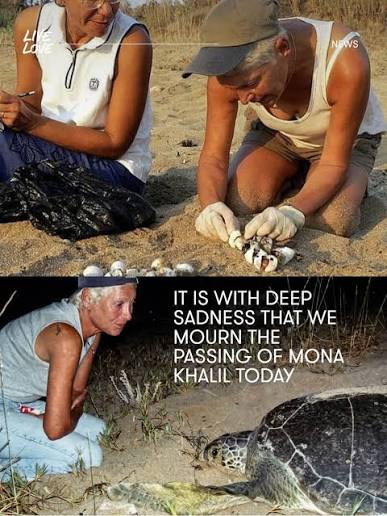
Mona Khalil, 76, passed yesterday, in a Beirut hospital, from the injuries sustained in a strike on her home, the Orange House, in Mansouri, South of Tyre. Her whole dedication in life was to protect the sea turtles on the coast of Lebanon. She had vowed herself to only do things in this life that made sense and gave her joy.
« She did not only protect turtles, she inspired people. »
To the question asked by an Israeli journalist if it seemed logical that « our soldiers are wounded and killed in the north every week inside what was declared a ceasefire » the Golani commander who led the raid on the Beaufort castle, and seized it without a fight, Lt. Col. Vackert, gave an honest, straightforward answer :
“Listen, this ceasefire never met us along the way. From our perspective, no one told us: you are in a ceasefire with Hezbollah, you are not allowed to fire or advance. We operate quite freely in our sector. We were in the Litani, they said ceasefire, we went out to Beaufort. So that is a discussion in the media. For the maneuvering forces, there is no ceasefire.”
To make his point clearer yet : « You said ‘ceasefire’, from my perspective you said nothing. I hear that discourse and understand that it is not relevant to me. We, in our operations and missions, continue as usual and see no difference. »
To the question whether he saw a « sustainable long-term solution », his assessment is :
Facts seldom considered : There are seven million Jews in Israel. One million are deeply religious, observant, refuse to carry guns and don a State uniform. Another million identify to them. Two million Israelis are Arabs, either Muslims or secular, conscription is not an obligation for them – only a few hundred serve in the army. Another three million Arabs live in the occupied West Bank. Two million more have been penned into the Western ruins of Gaza, whereas the army controls over sixty percent of the rest.
The ceasefire between Gaza and Israel was signed on October 9, 2025, endorsed on October 10. In those eight months, four Israeli soldiers were killed in Gaza, and over a thousand Palestinians, more than a quarter of them children.
In those eight months, what has changed for the inhabitants of Gaza, apart from the erratic and regular killing of people ? To this day, they are not allowed materials to repair their demolished houses, schools, public places. The caterpillars used to destroy homes have not been used to remove the rubble. Mentioned in the previous Newsletter, the heat there is stifling, from May till September. What access do they have to running, drinkable water ?
From accountancy to accountability. Another thousand people have been killed in the West Bank since October 2023. [We are talking about people, are we not]. Summary executions.
Not that nobody knows, but the mass media keep sliding from one eruption, one war zone to the next, and we skip along, sticking to perfunctory labels, into oblivion.
S.O.S. ISRAEL / S.O.S. PALESTINE, all in one. Only fourteen million people on this tiny slot of « holy » land, with six more million on that other tiny slot of land called Lebanon.
Do we have to remind that, out of these twenty million human beings, three have been forcibly displaced, to this day, and are now surviving under tents ?
[This is not the land I used to know, until a few years ago. If May 2026 was the worst month in all these years, June is even worse – as the American Vice-President has come to point to the killing madness spreading from South to North. « You can’t just kill your way out of solving » every security problem.]
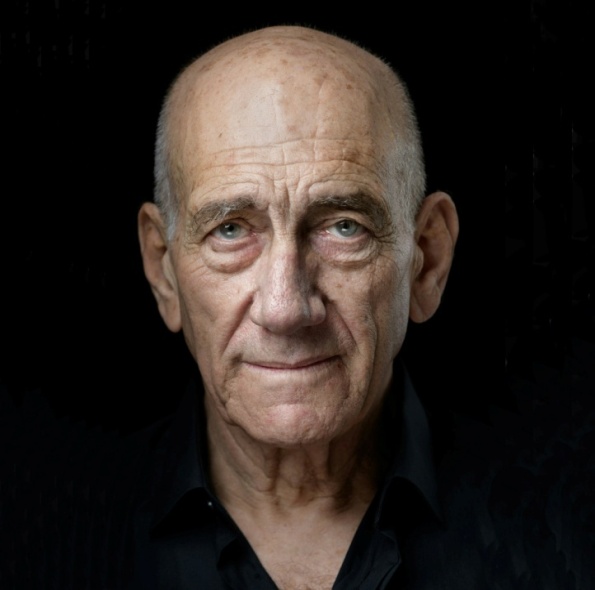
This orgy of killing is not being performed by deranged criminals, but by law-abiding citizens, upon orders, and laisser faire. Every passing week somehow worse than what came before ? A former Prime Minister (from 2006 to 2009) has spoken out, about the matrix of such growing horror.
You may suspect politicians. Would you suspect witnesses from long-established humanitarian organizations ?
Stop beating about the bush. Take it back to the occupation process. Occupation is occupation is occupation. Occupation : Kibush in Hebrew.
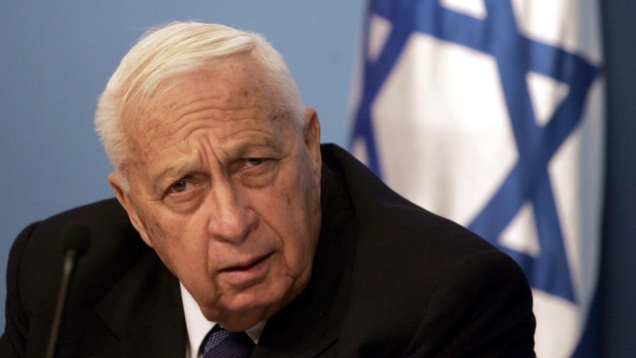
« You may not like the word, but what is happening is an occupation, kibush ze kibush. — to hold 3.5 million Palestinians under occupation. I believe that is a terrible thing for Israel and for the Palestinians, » stated PM Ariel Sharon before the Knesset on May 26, 2003. « It cannot continue endlessly. Do you want to stay forever in Jenin, in Nablus, in Ramallah, in Bethlehem? I don’t think that’s right.”
That was, presumably, twenty-three years ago. That was yesterday. Things have only been going from Charybdis to Scylla since. From the frying pan to the fire.
Take a recent publication, a Loving Dictionary of Israel, by Elie Barnavi – born in Bucarest, author of the remarkable Historical Atlas of the Jewish People, once an Israeli ambassador, commissionned by Ariel Sharon. A « must read », by all means.
All the more as a Loving Dictionary of Palestine has also been published recently, by Elias Sanbar – a Palestinian historian and diplomat of the same generation.
What is striking about Barnavi’s amazing book is that he has decided to make it a testimony about a human country that is no more. « So, what will you find there ? Characters [the dead only – for reasons that need no comment, I spared the living], places, doctrines, facts… which, together draw a portrait of the Jewish state.» How can you draw such a compelling portrait without today’s people ?
Will it be disregarded for being focused on ‘the past’ ? Beware that « the past is never dead, it is not even past »
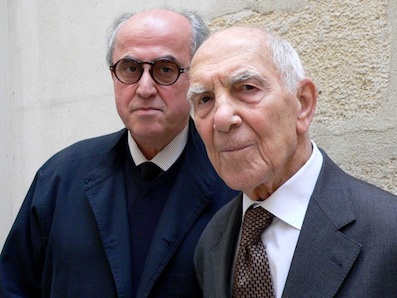
Elias Sanbar (born in Haifa, in what they call Mandatory Palestine) was photographed with Stephane Hessel (Time for Outrage ! 2010) on the picture below. What Sanbar has to say about the possibility of peace, remote as it feels : « to make peace is something extremely violent. »
«The transitions can be risky if they don’t open the door to changes, if they don’t transform mindsets, do not provide us with small daily proof that the choice made was the good one. »
Let’s face it : it’s either self-destructive violence, or self-constructive violence from now on. We still have to deal with the human matrix of chaos, separatism, segregation and death.
Surviving on borrowed time, making peace
with ourselves is around the bend for all of us…/….
UNDER THE HEAT DOME S.O.S. ISRAEL / LEBANON (3) S.O.S. PALESTINE (3)
Dedicated to Torsten Wiesel, Elias Corey, Adolfo Perez Esquivel, the Dalai Lama, Roald Hoffmann, Mario Capecchi
& to the loving memory of Desmond Tutu, Ilya Prigogine, Joseph Rotblat, Maurice Wilkins, Christian de Duve, Jack Steinberger, François Jacob, of Martin Luther King & Thich Nhat Hanh
1- Under the Heat Dome
« For the fifth time this summer, Europe is sweating under an intense heat wave. The signs of a persistently hot and exceptionally dry summer are everywhere. Brown, dusty patches have replaced verdant lawns in London’s parks. Major rivers like the Danube and the Rhine have retreated, exposing sandbars. The conditions have created a tinderbox for wildfires. Forests in Germany and in Bosnia and Herzegovina were ablaze on Friday, while firefighters were battling to save thousands of acres and hundreds of homes in Britain, France, Greece and Spain. »
Heat is Hammering Europe Again, The New York Times, August 14, 2026
4 a.m. in the cool of the night, somewhere in Europe. The earth is parched and scorched, all former green spaces are withered, yellowish, dusty. Under the lime tree you walk on a dry, crispy carpet of dead bracts, dead Tilia fruit, the likes of which you had never seen in a lifetime. You can feel the suffering of trees. It has not really rained for weeks on end. Not even thinking of the thousands of them which were engulfed in forest fires.
As for the feeding function of fields, we know that wheat harvests are going down.
Sixteen thousand people died from the heat during one peak week of June in Europe.
Hundreds of thousands have since been in slow, silent agony. You should take the subway in London or Paris to check out on faces. We know it isn’t any better in New York with temperatures close to 90°F, Memphis or Dallas (over 100°F in the afternoon). 95°F in Hanoi, 88°F in Saigon and Gaza.
Some cities are blessed with temperatures in their seventies, depending on the waters next to them, the altitude. The Question of the Place and Climate. Die Frage nach Ort und Klima, more than ever. Nietzsche, Ecce Homo (1888).
This is a whole brand new world out here. Much more serious than the covid pandemy. We’re actually suffocating, sweating and frying, gasping for breath. Forget what Miller called The air-conditioned nightmare (1940-1945). Breathe. Consciously. Deep consciousness, and cognition. On the way to conscientious objection.
Conscience and consciousness, two faces of the same coin.
A Call to Conscience. Martin Luther King (December 5, 1955-April 3, 1968)
First, breathe. Deliberately inspire.
One of the lessons learnt in Middle Bosnia, during their civil war : if you want to survive, you got to think fast, act slowly. Slowly : deliberately, in full mindfulness.
You might as well resort to Thinking, Fast and Slow. Daniel Kahneman (2011).
Or, shorter, simpler yet, on the threshold of the oven, of the furnace, or one step into it, The Miracle of Mindfulness, Thich Nhat Hanh (1975). Wisdom from Vietnam. 1975, the year the U.S. mighty army had to finally go home, with all their B52 bombers, Huey helicopters, Patton tanks, after they had lost 47,434 lives in combat, and killed three million Vietnamese out of forty million then, during the twelve years of their full military involvement. Have we forgotten the many lessons of Vietnam and its Fog of War ?
Now there are over a hundred million human beings in Vietnam. With a fertility rate slightly under 1,9, whereas it has fallen to 1,6 in the US, Australia, New-Zealand (and France). [Underneath 1,5 for Russia, Germany, Cuba, Switzerland, the Netherlands, for that matter ; underneath 1,4 for Canada, Austria, Greece ; underneath 1,3 in Spain, Japan, Italy…].
So, that is where we are now, in insidiously dying peoples, caught within persistent heat domes, with Millennials and the Z generation that seem to have lost the lust to live and transmit.
By the way, if you care to wonder, the vitality rate is of 4,3 in Yemen, 3,13 in Iraq and Palestine, 2,7 in Israel and Egypt, 2,6 in Syria, 2,5 in Jordan, 2,2 in Lebanon (but 1,66 in Iran). In Israel proper, among the religious Jews, you count close to 7 children per family, as opposed to around 2 among secular couples. Go figure.
2- S.O.S. ISRAEL/GAZA
Why should we start this Letter with the richest party, aware that the Gross Domestic Product per capita / Purchasing Power Parity in Israel is close to $ 70,000 (IMF source for 2026) whereas in Gaza it fell down to $161 a year at the end of 2023. Did you know ?
A ratio Gaza/Israel of 1,6 to 700 : of 0,22 to 100.
The average monthly wages in Gaza today are around$100. 85 €.
Whereas the Tel Aviv beaches are filled with suntanned scantily clad crowds, the Gaza beaches are covered with refugees’ shabby tents, displaced families who’ve been surviving in tents for three years. Barely some forty miles away in straight-line. Not to speak of the Ashkelon beaches, a dozen miles North of Gaza City.
Again, how do you fancy this, surviving with $100 per month– if you get lucky. about 85 €.
Just facts and figures. No a priori, no bias. Facts speak louder than speeches.
Granted that some remain stuck in the distant past, were the Germans forced to survive with under two hundred euros a year until 1948 ? Or the Hiroshima people, for that matter ?
Check it out. Look around. The poorest people on Earth, in Yemen, forty million Muslims live with about $ 300 per month – is this why they feel such instant solidarity with the Gaza people ? In South Sudan, thirteen million people have to survive with $ 130 per month. By the way, South Sudan was created ex nihilo, carved out of Sudan, in 2011, fifteen years ago.
Comparatively, Palestine has been vying for statehood since 1988, close to forty years now, and who knows where the files of its statehood have been spirited away ?
So, again, why should little Israel take provisory precedence (S.O.S. Israel) over its Palestinian counterpart at this stage ?
Now the heat is rising here, in this tiny office (two square meters). 77°F. No ventilator. Still, we have running water and electricity. What would it be under a thin layer of material under the sun, in a refugees’ tent, reaching 90 to 100°F ?
You need to know something : the Gaza people are very ordinary people. Among them you find employees, students, architects, shopkeepers, waiters, nurses, teachers, masons, surgeons, the whole usual range. I can testify about it, after working there in education for six years. You did meet ideologues and dogmatic civil servants, leaders – whose sin was to blindedly believe in the armed struggle, without ever weighing the schematics of interactions, the whole gamut of consequences / but who really does that anyway ?
The vast majority of the people were peaceful, busy with making ends meet, studying, passing exams. I stayed there long enough, walked the walk, observed all of them in daily life. I can testify.
As can be seen, I took this picture at the end of July 2011, on a beach in the North of Gaza, during the day-long gathering of thousands of kids, brought in buses by UNRWA young monitors, in an attempt to beat the Guinness record of the most kites flown simultaneously, until then held by Chinese kids, with some 11,000 kites, if my memory serves me well.
And guess what, on that last Thursday of July 2011, these beautiful, innocent kids of Gaza, gathered by the United Nations Relief and Works Agency teams at al-Waha Beach, did win, with 12,350 kites flown simultaneously ! Guess what too, the wind from the South was blowing towards Israel. Al-Waha Beach is less than one mile from the border with Israel.
Fifteen thousand kids guided by the UNRWA teams. This was Gaza to me. Of these fifteen thousand kids of 2011, how many of them were killed, or maimed, in the last three years ?
How did the media North of the border report the event ? Could you find one reference ?
So, yes, pity the Northern neighbours, who were not told, not informed, who could not seeany picture of these 12,350 flying messages of peace and joyful hope. S.O.S. Israel too.
The underground war machine in Gaza was something else, a secret forbidden kingdom in its own right, that nobody was allowed to penetrate, that nobody would talk about, that was just surmised. You had two distinct worlds in Gaza : the surface life, and the underground. A few hundred men, at most, knew, and would go back and forth between the two. The rest of the population prefered not to know, not to inquire.
How many times, in all these years, did I ask leaders, insisting to visit a smuggling tunnel to Egypt? Again and again, I was denied any possibility of access. Speaking of the Westward tunnels, not the taboo ones to Israel.
3- S.O.S. June-July-August 2026 / S.O.S. LEBANON
In June 2026 we sent three S.O.S. messages worldwide, to Nobel laureates (standing for common sense and unstoppable human progress). S.O.S. ISRAEL / S.O.S. LEBANON / S.O.S. PALESTINE. In the background, you could read S.O.S. IRAN. Refering to the people, not the state-nations as such. Their explicit end was to express conscientious objection to warfare in Lebanon, in Gaza, in Iran, in the West Bank – and in Israel, as a tidal effect.
We were sinking fast then. In Lebanon, twelve children were killed and maimed daily, even after the Hezbollah-Israel truce was agreed, in the wake of a U.S.-Iran deal reached on June 15, including ‘Immediate Termination’ of any fighting in Lebanon.
You noticed that half our sources are from Lebanon, L’Orient Today, We started following them in March 2026, as they offer insight from inside, less state-controlled than the media in Egypt or Jordan. This is part of the approach here : if you want to get a less biased view of what is going on, you have to leave the fast highway of comfort zone media, and cross borders. You have to listen to what the others concerned have to say, the Lebanese, the Egyptians, the Saudi Arabs, the Jordanians, the Syrians, the Turks, the Iranians, the United Nations people…
You do not escape wild fires and dangers through blinders and cervical rigidity.
Now, seemingly, the United Nations has lost much of its weight and influence, to be supplanted and replaced by the United States. Not quite the same vision of Unity or Union. Judge by the results, What does this brave new world order look like ?
Before the summer of 2026, who could put names on the fifteen key Middle East countries ? Before April 2026, who knew where the Hormuz Strait lies ?
Before July 2026, who on Earth knew where the Bab el Mandeb Strait is, and what countries border it ? Before March 2026, who knew what the neighbours of Iran are ? Or even how many people live in Iran, for that matter ?
Americans are known to be wholly ignorant of world geography. Are Europeans any better ? Who has any idea, anyway, of how many US military bases there are in Jordan, the United Arab Emirates, Kuwait, Saudi Arabia, Syria, up to Turkey and Cyprus ?
The following selection of articles from nine sources (3 American, 4 Israeli, 1 Lebanese, 1 British) may read like a descriptive chronology for July 2026 :
Susannah George, The Washington Post, August 15, 2026
Paradoxically, this fourth part which was labeled S.O.S. Lebanon to start with, ends up practically defined as S.O.S. USA.
5- To Conclude for Now – as of mid-August 2026
As far as we can see from what precedes, this thing, the March 1 Attack, is not working.
The March 1 Attack : the massive aerial assault on Iran by the Israeli-American alliance.
It is not working, from a technical, objective point-of-view.
A complex equation, indeed, with fifteen players involved (the Gazan, the Israeli, the American / the Lebanese, the Iranian, the Omani / the Yemeni, the Saudi, the Egyptian / the Jordanian, the Syrian, the Iraqi / the Pakistanese, the Chinese, the Russian). All revolving around the historical hinge : Gaza.
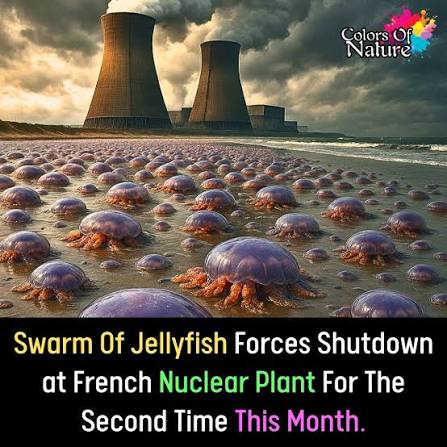
A simple obvious truth : we have burning issues to deal with, all of us. The Water warming problem and the Droughts, as existential priorities. The recurring oppressive Heat waves. Did you know that four days ago, on August 11, both in 2025 and 2026, tons of jellyfish clogged the cooling system, impaired the functioning of the largest nuclear plant in Europe ? The connection : warming seas favor the reproduction of jellyfish.
Other than from invasions of jellyfish, « France has seen nuclear power production disrupted by multiple heatwaves and droughts this year, with EDF shutting down several reactors in June and July because of extreme heat. » Le Monde, August 11, 2026
In this glaring light, the Middle East is far from pressing concerns for North America and Europe.
Take another look at the maps : the days of MM. Sykes and Picot’s agreement to share the land from Kirkuk to Beirut according to British and French interests (1916), the days of Colonel Lawrence, have long been gone. And history has taught us that the Americans, when they step in, don’t do any better than the British and the French – from Vietnam (1963-1975) to Iraq (1990-2003).
« Do they know history ? »
Facing growing emergency situations provoked by excessive heat, and the rising numbers of climate refugees ; since this thing of an endless war – from Ukraine to Iran and Israel/Lebanon/Palestine – is not working, we have to ask whose interest these protracted wars really serve, apart from the main beneficiaries among arms-producing companies.
Do we have to ask, or is it that we’d rather not investigate (among the Nobel laureates in Economic Sciences, who has been researching the field ?) ? The list of war profiteers yet is no state secret, it’s out there, in the open, for all to find out :
Some of these companies draw over 90% of their total revenues from arms revenues. To name but eight of them : Transeuropean KNDS (100%) and MBDA (99%) ; the French Naval Group (98%) ; the Israeli Rafael group (98%) ; the British BAE Systems (95.4%) ; the American Northrop Grumman Corporation, the Israeli Elbit Systems (92%) ; the American Lockheed Martin Corporation (91%).
Forget the big notions for a moment.
Remember the Vietnam veteran who turned from a fighter to a preacher when he came back home , his pledge more than fifty years later : « I’m sick of the war. I’ve been in combat and seen the destructive nature that people assume the longer they are in war. »
We’re all sick of these wars. It’s all too much, much more than we can live with normally. What war does to you, even if you are not in a combat zone, and too old or too young to carry a gun : they waste your everyday life, they waste your precious time on earth. Filling your saturated mind with false news, angst and worries – how will it all end ?will it ever end ?
It is our job, one and all, to tend to the first victims of war, truth and trust.
Restore them, redeem them.
Opening the doors in the heart of the night, to let the cool in.
Learning to live a new way of life, step by step.
No need to panic. No need to repress or suppress.
No time to waste. Three affirmative Nos.
The good news is in the news, once you get the broad picture, in depth.
Sapere Aude. Dare to Know. Knowledge leads to courage – and vice versa.
The risk was to drown into toxic disgust, of voluntary servitude and ignorance.
Rushed into recurrent emergency modes, to escape this spiral of a distorted sense of time, we should celebrate the present instant of acknowledgment. Reassess priorities, pivotal shifts.
Redefine shelter and shadow, refuge and fortress, shield and rampart…
Not willing to close mind and ears out of confusion, but rather to reopen them slowly, deliberately. Stronger, more focused, as we seize and strengthen every instant of awareness.
To heal the destructive nature that we all assume the longer we live through unwanted wars, re-energize with strong multiplier effects of the instant.
Redeem the moment, to stop the self-defeating sprees.